Ahmedabad–Dholera Expressway 2026: Route, Connectivity & Investment Impact

Ahmedabad–Dholera Expressway: The Infrastructure Project Transforming Dholera Smart City
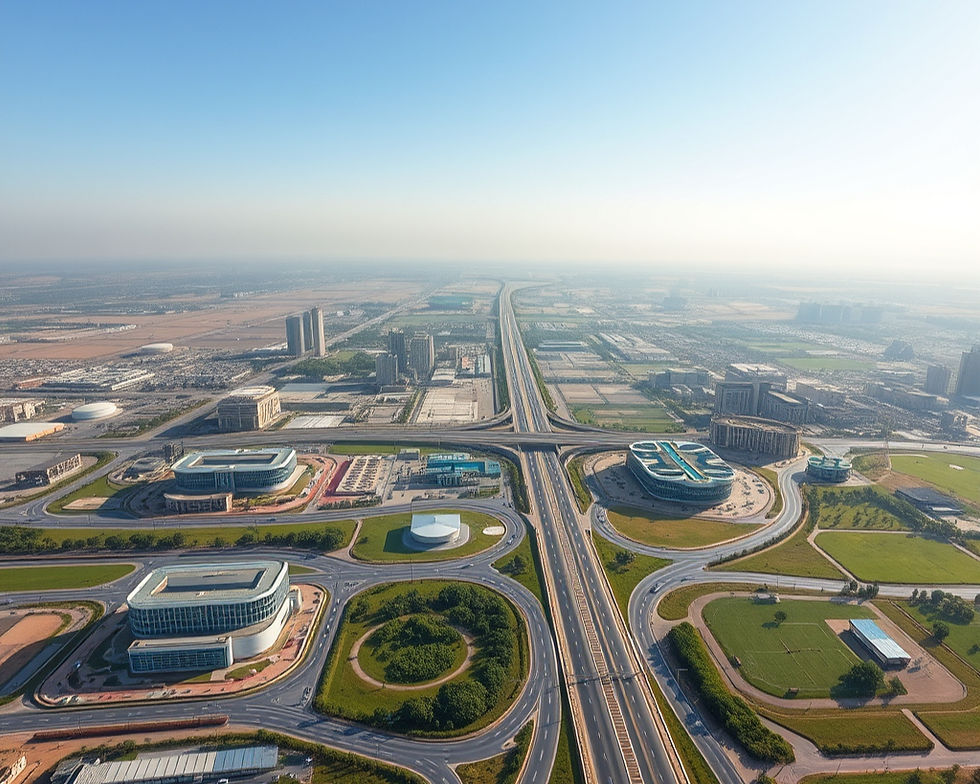
The Ahmedabad–Dholera Expressway (NH-751) is one of the most significant infrastructure projects supporting the growth of Dholera Smart City. Stretching approximately 109 kilometers, this access-controlled expressway connects Ahmedabad directly to Dholera Special Investment Region (SIR), dramatically improving connectivity between Gujarat's commercial centre and India's first Greenfield Smart City.
Developed by the National Highways Authority of India (NHAI) under the Bharatmala Pariyojana initiative, the expressway serves as a critical transportation corridor for industrial development, logistics operations, real estate growth, and future economic expansion within Dholera.
Why the Ahmedabad–Dholera Expressway Matters
Before the development of the expressway, travel between Ahmedabad and Dholera typically required more than two hours via state highways. The new corridor significantly improves accessibility, making Dholera a more practical destination for investors, businesses, professionals, and industries.
The expressway plays a strategic role in supporting:
Dholera Smart City development
Dholera International Airport connectivity
Delhi–Mumbai Industrial Corridor (DMIC)
Industrial manufacturing zones
Logistics and warehousing infrastructure
Future commercial and residential growth
As infrastructure improves, Dholera continues to attract increasing attention from both domestic and international investors.
Route and Key Connectivity Points
The Ahmedabad–Dholera Expressway begins near Sarkhej in Ahmedabad and extends to the Dholera Special Investment Region.
Major connectivity points along the corridor include:
Sarkhej, Ahmedabad
The northern starting point of the expressway, providing access to Ahmedabad city, Sardar Patel Ring Road, and the broader national highway network.
Sindhrej Interchange
A key junction supporting nearby agricultural and industrial zones.
Sanand Industrial Belt
The route passes near Sanand, one of Gujarat's major automotive and manufacturing hubs.
Vejalaka Interchange
An important regional connection point linking nearby towns and industrial areas.
Dholera International Airport Access
The expressway directly supports connectivity to the upcoming Dholera International Airport at Navagam.
Dholera SIR Activation Area
The expressway terminates near the core development zone of Dholera Smart City, providing direct access to approved Town Planning (TP) Schemes and industrial sectors.
Technical Specifications
Parameter | Details |
Highway Designation | NH-751 |
Length | Approximately 109 km |
Lane Configuration | 4 Lane Access-Controlled |
Expansion Provision | Expandable to 8 Lanes |
Implementing Agency | NHAI |
Development Program | Bharatmala Pariyojana |
Interchanges | 8 Major Interchanges |
Project Cost | Approximately ₹3,300–₹3,500 Crore |
The project was executed through multiple engineering packages to accelerate construction and ensure efficient delivery.
Travel Time Benefits
One of the biggest advantages of the expressway is the substantial reduction in travel time.
Route | Earlier Travel Time | Current Travel Time |
Ahmedabad to Dholera SIR | 2–2.5 Hours | Approximately 40–45 Minutes |
Ahmedabad to Dholera Airport | More than 2 Hours | Less than 1 Hour |
Ahmedabad to Sanand Industrial Zone | 45–60 Minutes | Approximately 25 Minutes |
Improved travel efficiency creates new opportunities for business expansion, employee mobility, logistics management, and industrial growth.
Impact on Real Estate and Land Prices
Infrastructure development has historically been one of the strongest drivers of real estate appreciation. Improved connectivity often leads to increased demand for land, industrial space, commercial properties, and residential developments.
The Ahmedabad–Dholera Expressway is expected to support:
Increased industrial investments
Growth in warehousing and logistics facilities
Rising demand for commercial land
Greater residential development
Enhanced investor confidence
Long-term appreciation potential in strategically located areas
As Dholera continues to develop, connectivity improvements are expected to remain a major catalyst for future growth.
Industrial and Logistics Advantages
Efficient transportation infrastructure is essential for industrial expansion.
The Ahmedabad–Dholera Expressway strengthens Dholera's industrial ecosystem by supporting:
Manufacturing Growth
The corridor improves access for large-scale manufacturing projects and industrial parks within Dholera.
Logistics and Warehousing
Faster transportation times reduce supply chain costs and improve operational efficiency for logistics operators.
Semiconductor Ecosystem
The upcoming semiconductor manufacturing investments in Dholera are expected to benefit significantly from improved road connectivity.
Renewable Energy Infrastructure
The Dholera Solar Park and related renewable energy projects gain better access for equipment transportation, maintenance operations, and industrial support services.
Connection with Dholera International Airport
A major advantage of the expressway is its direct integration with the upcoming Dholera International Airport.
The combination of:
Ahmedabad–Dholera Expressway
Dholera International Airport
Dholera Smart City
DMIC Industrial Corridor
Semiconductor Manufacturing Projects
creates one of India's most significant emerging infrastructure ecosystems.
Improved air connectivity is expected to strengthen Dholera's position as a future hub for manufacturing, exports, logistics, and international business activity.
Future Infrastructure Catalysts
Several major projects are expected to complement the benefits of the expressway:
Dholera International Airport
Expected to enhance passenger and cargo connectivity.
Dholera Solar Park
One of India's largest renewable energy projects.
Semiconductor Manufacturing Facilities
Large-scale investments expected to create employment and industrial demand.
Industrial Corridors under DMIC
Supporting manufacturing, logistics, and export-oriented industries.
Proposed Rail Connectivity
Future rail infrastructure is expected to further strengthen regional transportation networks.
Together, these developments create a strong foundation for long-term economic growth in Dholera.
Investment Perspective
The Ahmedabad–Dholera Expressway represents a major milestone in Dholera's transformation from a planned smart city into an increasingly connected investment destination.
For investors evaluating opportunities in Dholera, important factors include:
Infrastructure development progress
Airport connectivity
Industrial expansion
Government-backed planning
Approved TP Scheme locations
Long-term growth potential
As infrastructure projects continue to mature, Dholera remains one of the most closely watched emerging real estate and industrial markets in Gujarat.
Conclusion
The Ahmedabad–Dholera Expressway has significantly improved connectivity between Ahmedabad and Dholera Smart City. Beyond reducing travel time, the project supports industrial growth, logistics efficiency, airport accessibility, and long-term real estate development.
As complementary projects such as Dholera International Airport, semiconductor manufacturing facilities, solar infrastructure, and industrial corridors continue to progress, the expressway is expected to play a central role in shaping the future growth of the region.
For investors, businesses, and stakeholders monitoring Dholera's development, the Ahmedabad–Dholera Expressway represents one of the most important infrastructure milestones in the area's evolution.

Comments